
What does medical progress mean for patients?
Medicine impacts our lives – and saves lives.
New therapies and innovative medicines improve existing treatments and enable new ones that were previously not possible, potentially adding years to patients’ lives.
However, access to innovative medicines in Switzerland has been taking progressively longer since 2016, which has significant consequences for our health.

Innovative therapies that save lives
Research-based pharmaceutical companies continuously develop new therapies for cancer, rare diseases, and other chronic conditions.
Survival rates for cancer are significantly increasing thanks to medical progress. However, how quickly patients gain access to these new therapies determines how much they benefit from medical advancements.
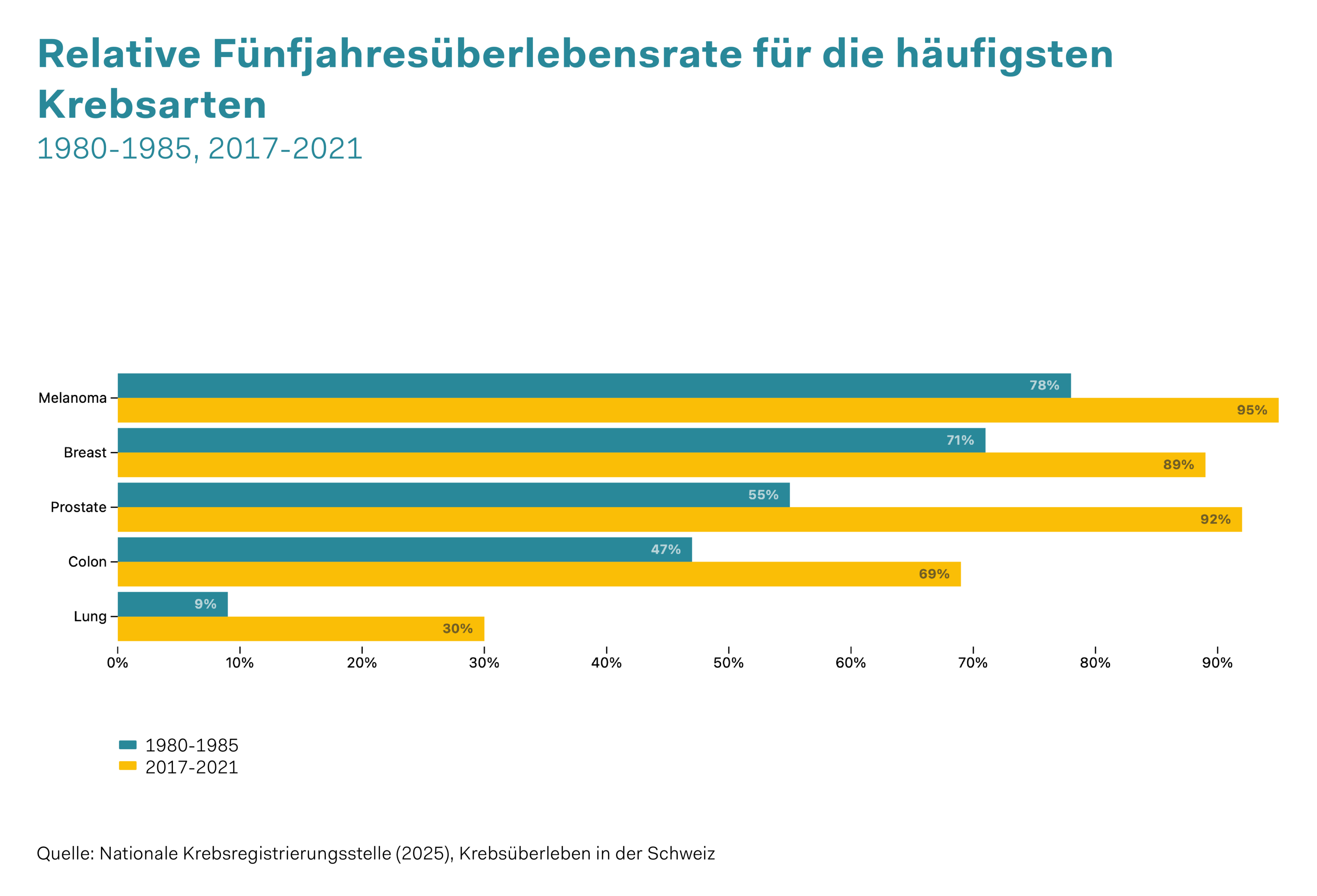
Compared to the 1980s, cancer patient survival rates have almost doubled in the 2020s.
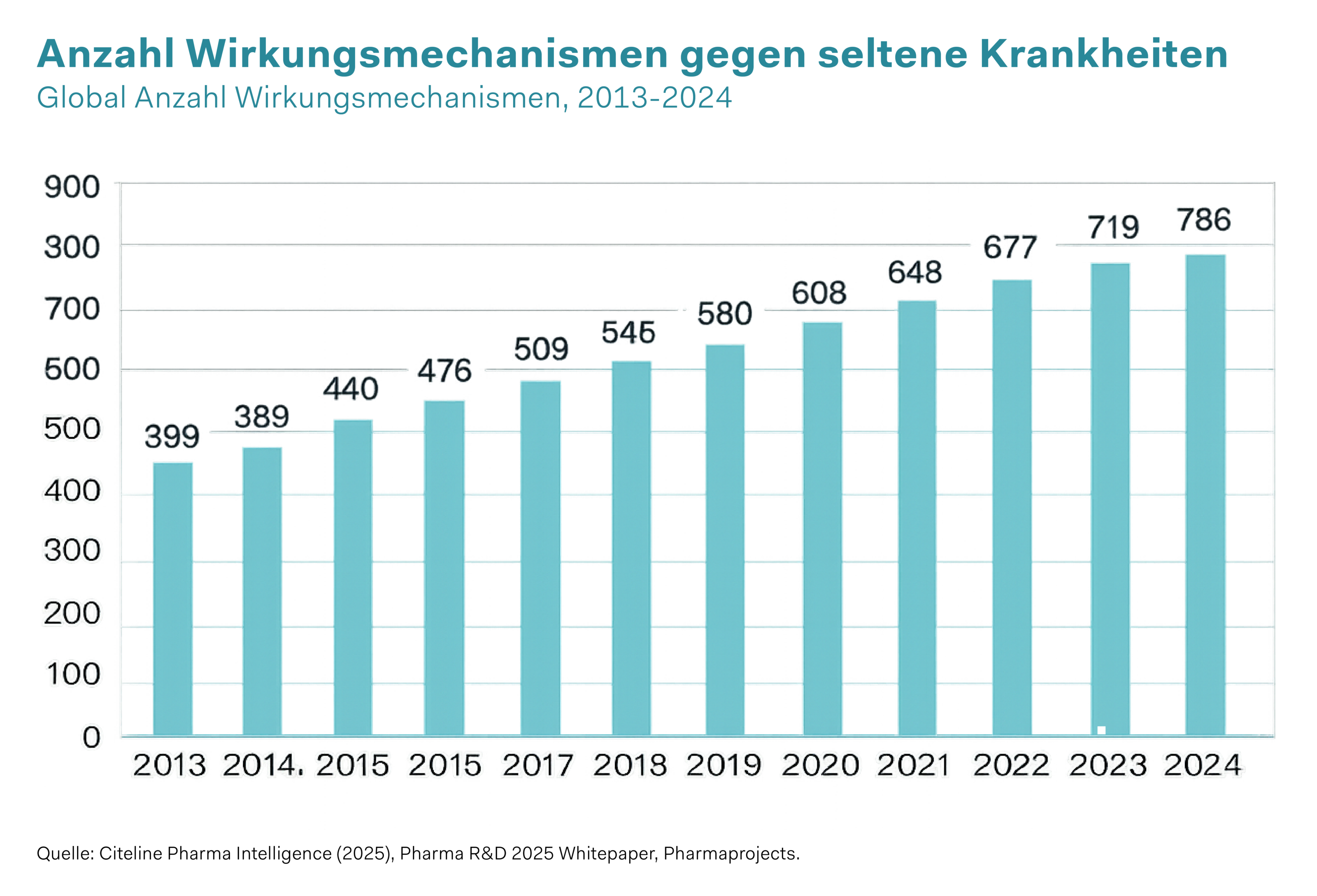
Many diseases that were once fatal are now treatable or manageable.
Early access through clinical trials
Clinical trials provide patients with early access to innovative therapies – often before they are regularly available. However, their number is decreasing in Switzerland.
Clinical trials are a central component of medical development. They allow new therapies to be tested under real-world conditions while simultaneously giving patients early access to innovative treatments.
Switzerland’s attractiveness for clinical trials is declining. This is reflected in a decreasing number of clinical trials.
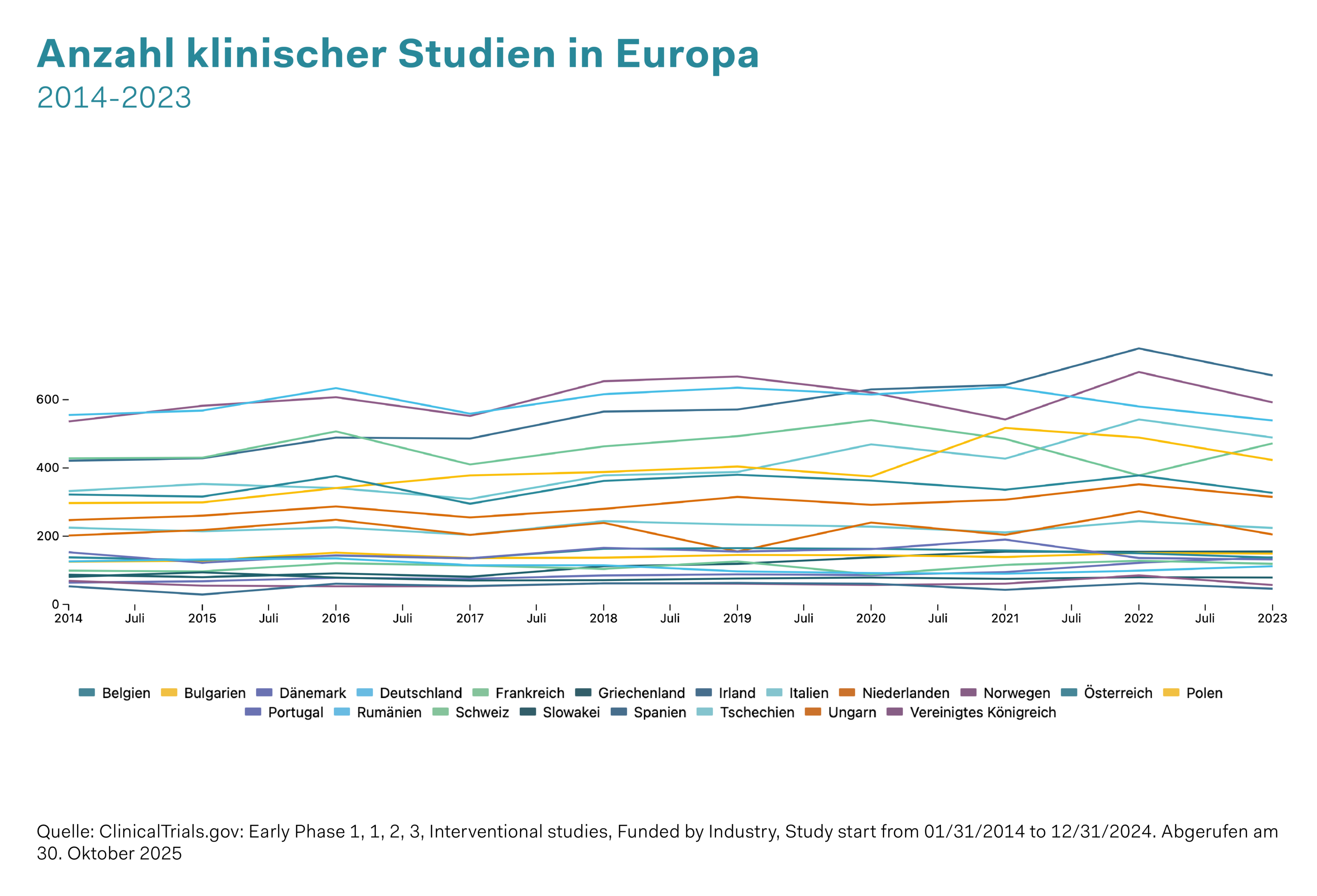
Clinical trials enable early access to innovative therapies for Switzerland.
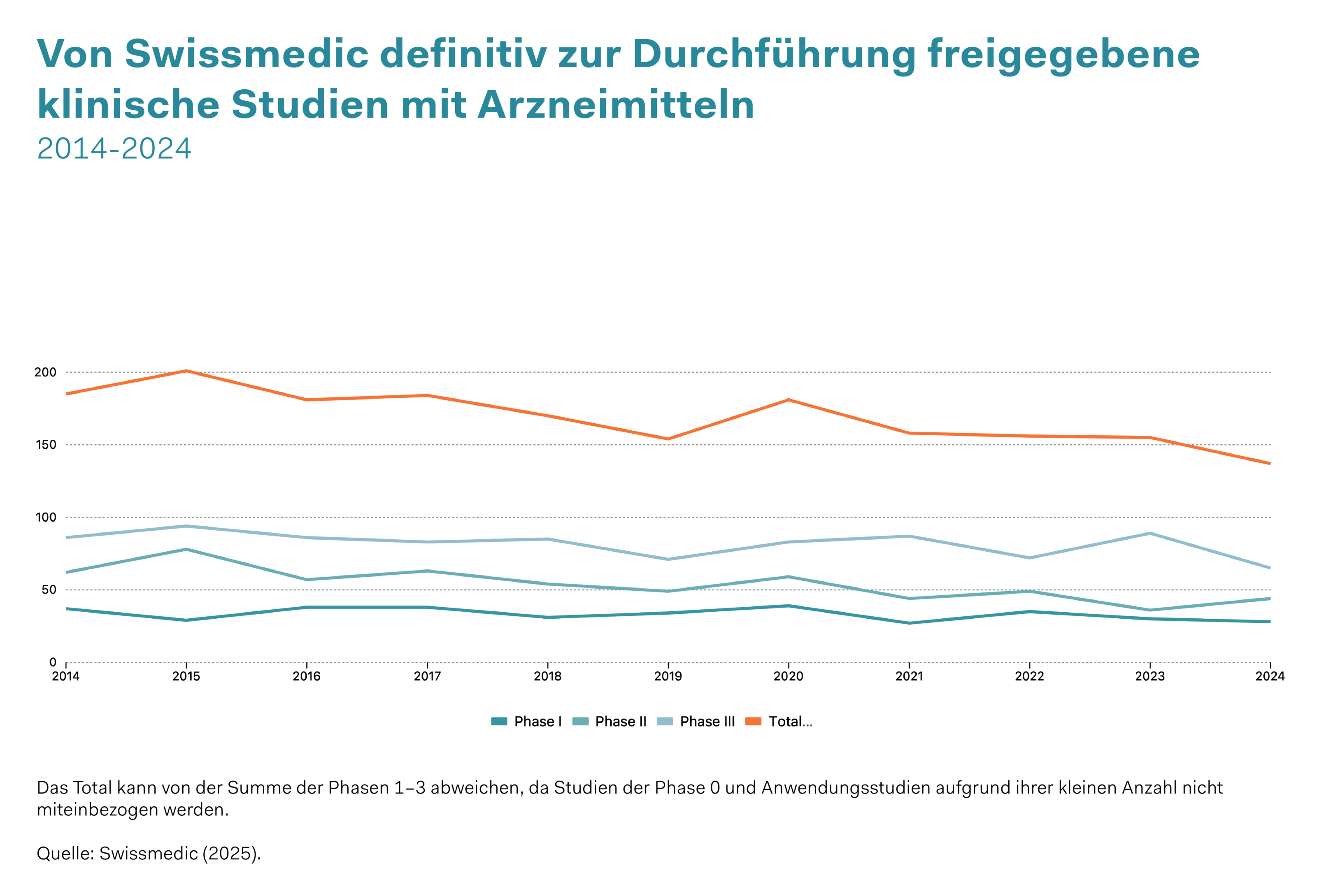
An attractive environment for clinical research requires efficient processes, modern digital infrastructure, access to health data, as well as innovation-friendly authorities and regulatory frameworks.


Patients wait longer for new medicines
It is already a fact that patients today wait longer for new medicines than before, and access is increasingly delayed.
Since 2014, the number of approved but not yet reimbursed medicines has grown sharply, reaching 355 in 2024. Furthermore, for 29 out of 31 products (94%), inclusion in the specialty list took longer than the 60 days stipulated in the regulation.
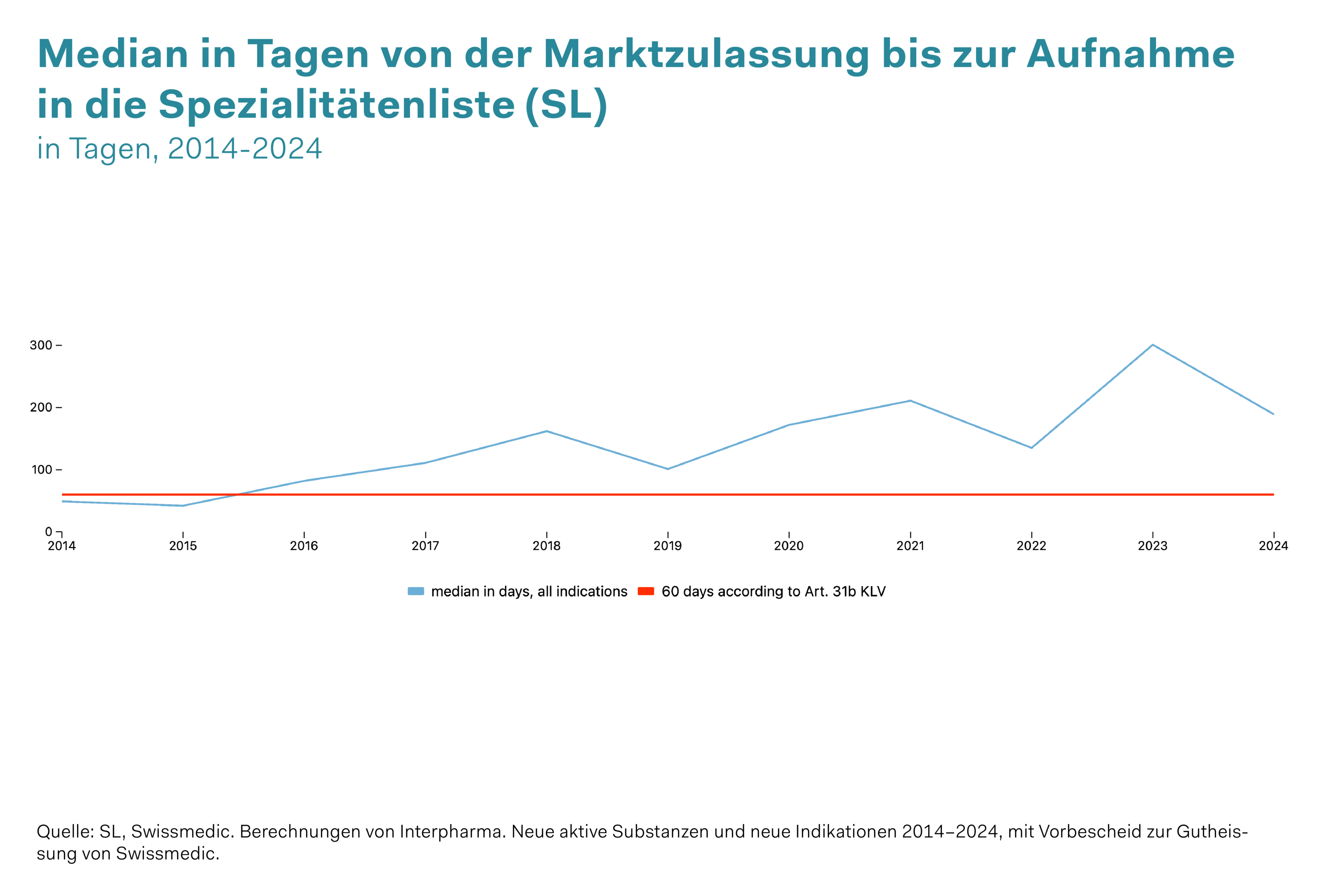
The median duration from approval to inclusion in the specialty list was 189 days in 2024, instead of the stipulated period (Art. 31b KLV) of 60 days.*
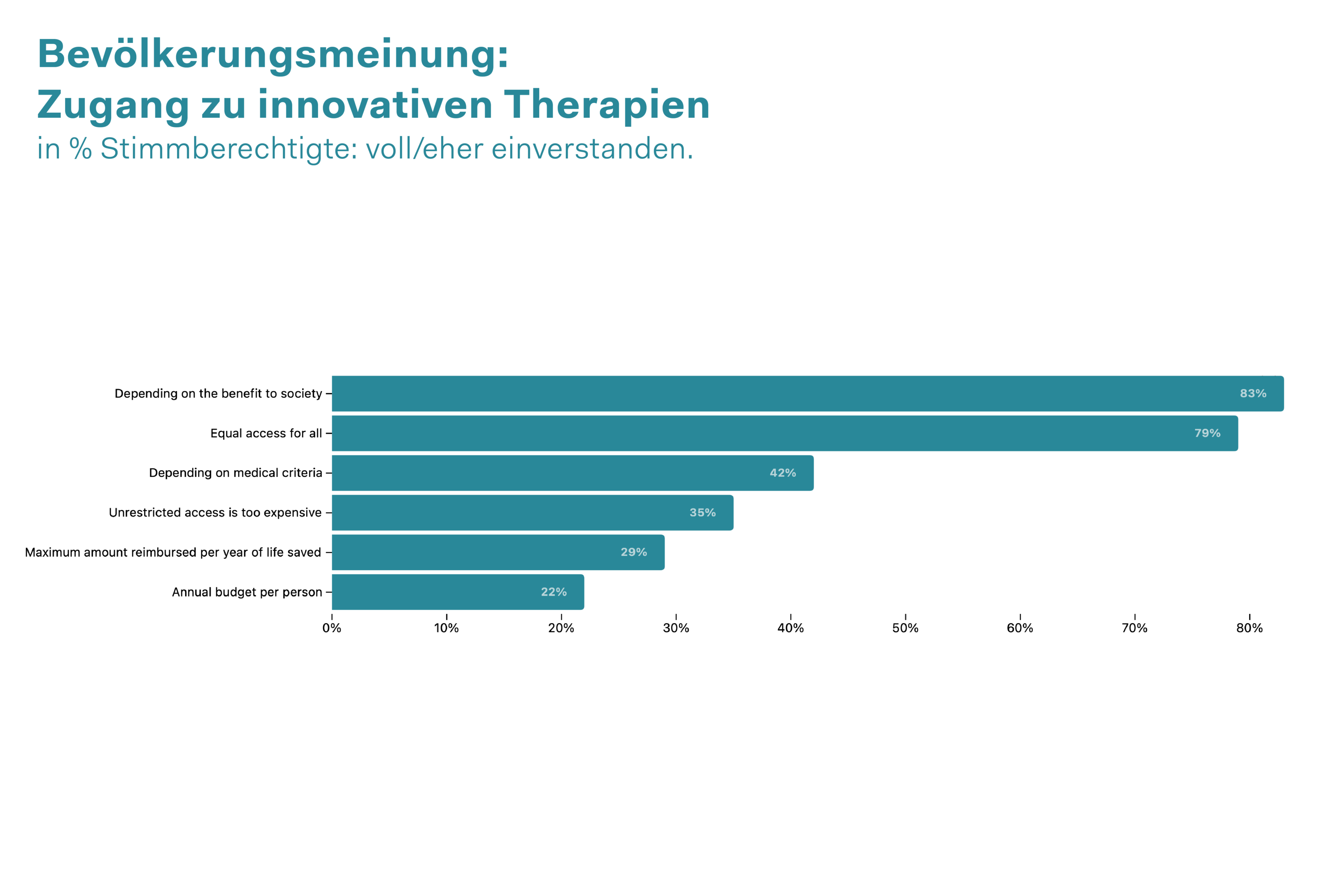
Population desires fair and benefit-oriented access to innovative therapies
* If the conditions for processing the application according to Art. 69 para. 4 KVV are met before definitive approval by Swissmedic, the FOPH usually decides within 60 days of definitive approval.
Fewer innovative medicines are available in Switzerland
Not all approved medicines are currently available in Switzerland.
The availability of medicines is a central component of a functioning healthcare system.
In 2018, approximately 64 percent of EMA-approved medicines were fully available in Switzerland. In 2024, this figure was only 47 percent.
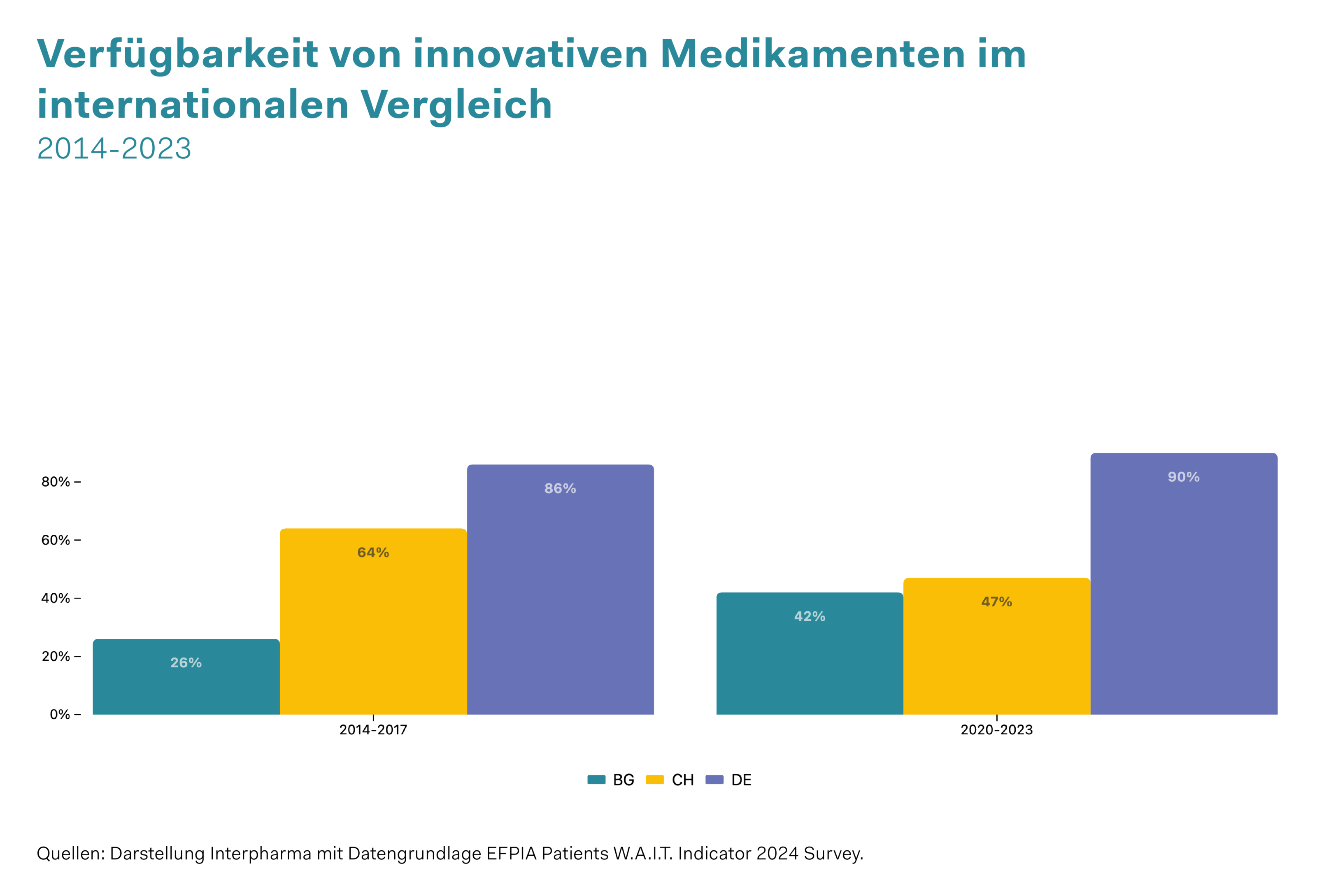
Compared to Germany, only about half of the new innovative medicines reimbursed there are equally available to all patients in Switzerland. In an international comparison, Switzerland is now only just ahead of Bulgaria.
Security of supply is at stake
Global developments threaten stable supply.
Shortages and dependencies are increasing.
Geopolitical dynamics are putting massive pressure on Switzerland as a location and endangering the supply of vital medicines to patients.
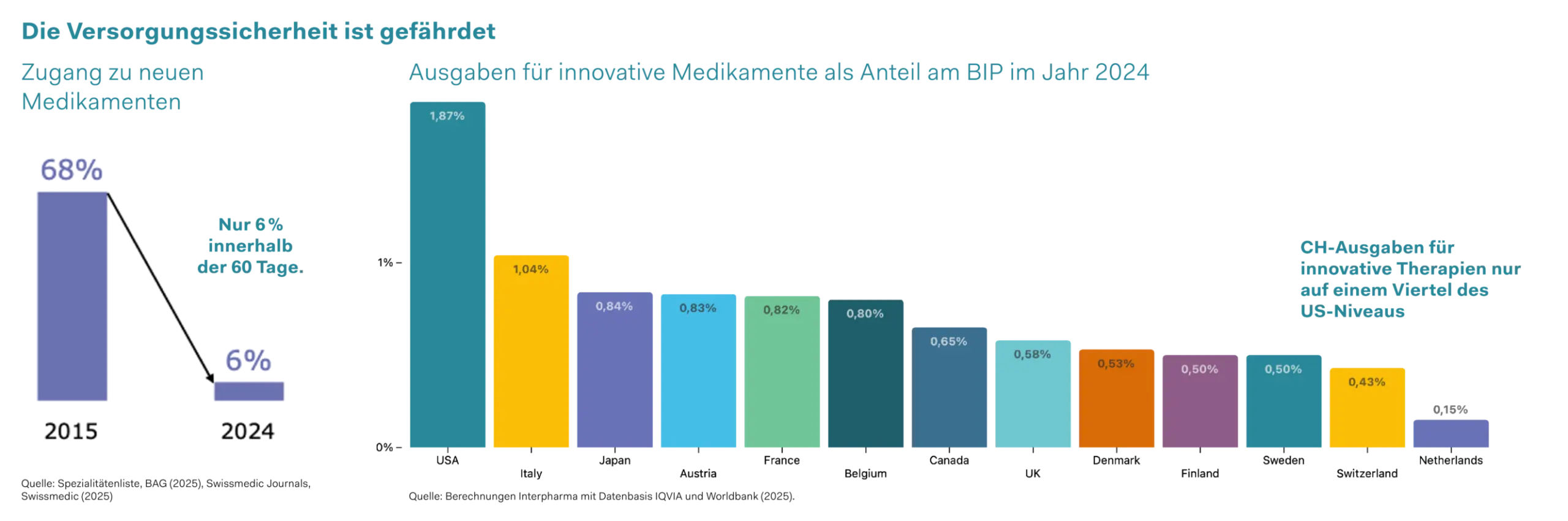
Geopolitical dynamics are putting massive pressure on Switzerland as a location and endangering the supply of vital medicines to patients.
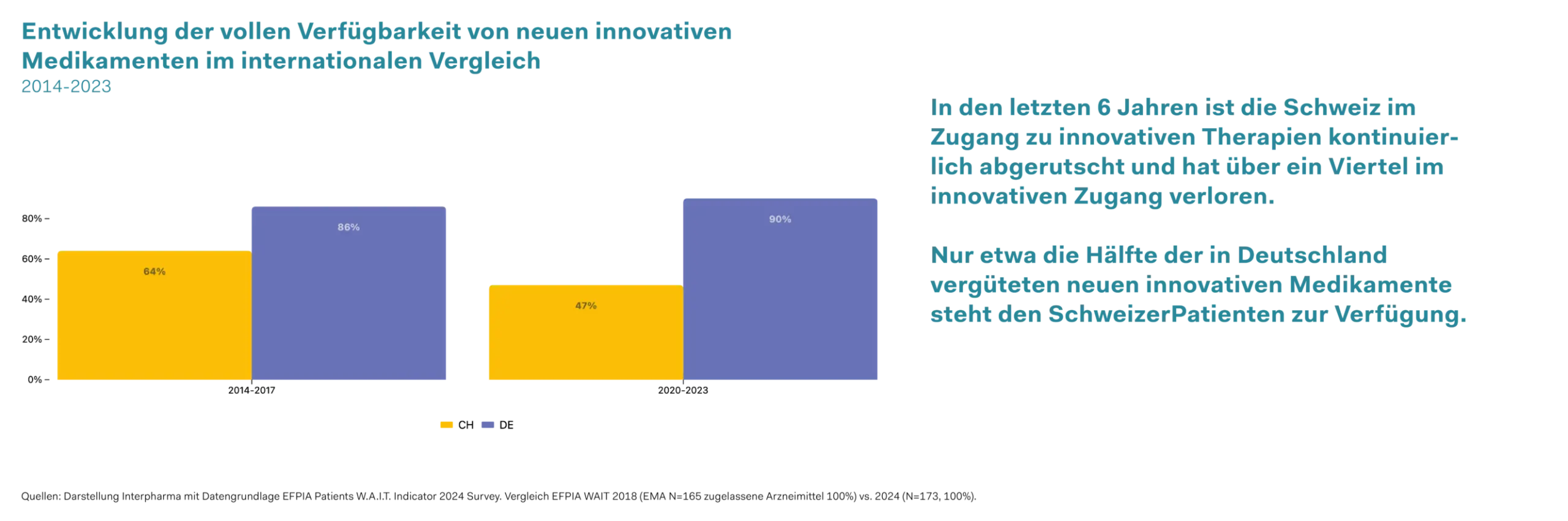
Over the past 6 years, Switzerland has continuously slipped in access to innovative therapies, losing over a quarter of its innovative access.
All of this has far-reaching consequences for Switzerland's healthcare system.
The situation for patients is clear: access to innovative medicines and new therapies can save lives. Medical progress, innovation, and thus ensuring security of supply are crucial and not to be taken for granted.
The right political and structural decisions are needed now to secure Switzerland’s healthcare system in the long term.